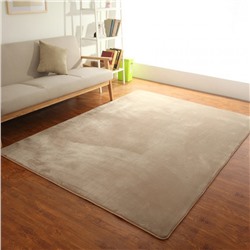
 Solid parquet is a model made entirely of precious woods. Its structure is layerless and homogeneous.
Its raw material is draft logs brought from Africa and the Far East. Leafy species are preferred, as their endurance levels are long. Local productions are also available. In its construction, tree species such as Maple, Beech, Walnut, Teak, Bamboo are used.
In this type of parquet, there is a 6 millimeter screed margin. It can be compressed and polished approximately 8 times. The time it takes to scrape depends on usage. However, it is recommended to do it every 5 years. In other words, it can be said that the life of a flooring is about 40 years. It can be used for a very long time if necessary maintenance is done.
Some growers specially grow trees themselves in order to ensure the continuity and quality of the flooring. At the same time, thanks to this method, they prevent damage to the environment. It will be the healthiest method to pay attention to the fact that the manufacturers have received the necessary documents and to work with reliable brands.
What are the Advantages of Solid Parquet?
It is a natural type of parquet.
It is healthier than other flooring.
It has an aesthetic appearance.
Its use is long term.
It makes sound and heat insulation.
Polish can be applied.
It is a recycled product.
What are the Disadvantages of Solid Parquet?
Although it is an old method, it is an expensive product.
After its assembly, the time for the space to become usable is quite long. (around 10-15 days)
It swells in cases such as waterlogging. Its renovation is quite troublesome; The entire floor may need to be replaced.
If there is deformation in some areas, even if that area is repaired locally, the difference with other areas will be evident. After the area is repaired, a general sanding and polishing process is required.
It is affected by humidity and changes in temperature level; There are gaps between the parquets.
Recommended article, suspended ceiling systems click here to get detailed information about it.
How to Repair Massive Parquet?
The use of solid parquet requires some necessary maintenance, as in any parquet. There are some tricks that need to be done, especially in case it gets damaged or before it gets damaged.
What to Do in Case of Flooding
Flooding is the most irreversible situation for solid flooring. If the entire pavement area is flooded, the only action that can be taken is to replace all the pavements.
When a certain coating area sees water, use can be continued by replacing only the part affected by this situation.
However, in both cases, it is necessary to ensure that the floor to be coated is completely dry. The floor that seems dry from the top can ruin your parquet by making a barrier after coating.
The coating, which is completely affected by water, never regains its former state even if it is tried to be dried. If twists or openings have occurred, you will not be able to get your parquet back to its former performance.
What to Do in Case of Scratching
In cases such as scratches, the situation can be compensated by making a scraper (it is the process of smoothing and polishing the surface by sanding the wooden floor coverings and filling the gaps between the parquets). However, this application is not a very desirable method in newly furnished areas. Scratching the entire area for a local scratch is not a very logical solution.
Retouching pens are also a method that can be used for scratches. With a pen suitable for the color of the drawn area, the color separation can be closed. You can make your parquet look smoother by applying a semi-matt polish to the painted area. However, this method will not make your flooring look like new.
Precautions to be Taken
In order to prevent your flooring from being scratched by your furniture, you can prevent two hard floors from irritating each other by sticking furniture felts to the feet of your furniture.
You can fix your belongings with different systems so that your belongings do not slip and cause scratches on the floor.
You can extend the life of your solid parquet by taking proper care of it.
What is the Difference Between Solid Flooring and Laminated Flooring?
What is Solid Parquet?
Solid parquet is the first type of industrial parquet produced. It is a type of parquet that is applied by cutting a single piece of wood in certain sizes and sticking it on the floor without using any technology. Today, more useful types are produced than solid parquets produced with old techniques.
It has many disadvantages compared to other types of parquet. For example, even solid parquets that have been dried and polished under the best conditions may experience wear, such as turning or opening, when applied to an environment experiencing humidity or temperature changes. This may seem like an error. However, the interior of solid parquet is quite a natural reaction. Because the laid tree is in one piece and still has a living structure. It responds to such changes in the weather; It swells when moistened, and dries up when the air is warm. Meanwhile, mass changes occur in massive parquets.
What are the Differences?
In solid parquets, some problems may occur during the application. These troubles; The fact that you can see your parquet color not beforehand, but after the application is finished, after the polish applied on it. In other words, the color you expect may not come out after polishing, or this color may not suit the space.
At the same time, you have to wait for these parquets to get used to the space. This means that you have to wait ten days for the parquet to recover. Because this type of parquet is a living type of flooring and needs to get used to the conditions it is in.
In laminated parquets, only the top layer is natural wood. Its lower layers are inferior in quality to the wood used above. At the same time, the top layer is varnished or coated with protective agents for protection. Thus, situations such as scratching or crushing are less observed than solid parquet.
Ancestor of Parquets
We can say that solid parquet is the ancestor of parquet types. Other flooring styles are derived from solid parquet in order to make the use of solid parquet better, more alternative and stronger.
 Flooring Systems